
In today’s logistics and supply chain industry, choosing the right pallet can significantly impact cost, durability, hygiene, and operational efficiency. The two most commonly used options are wooden pallets and plastic pallets.
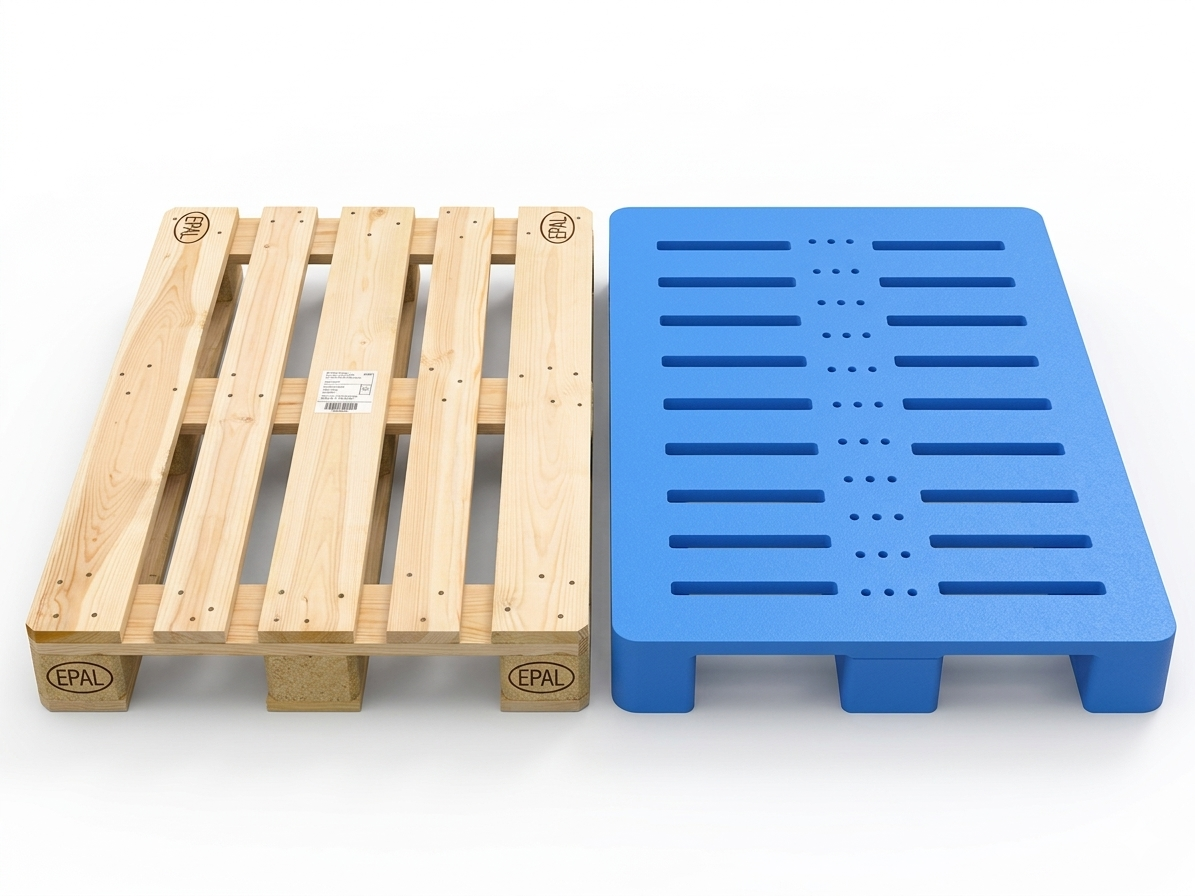
Wooden Pallets 🪵
Wooden pallets are the traditional and most widely used solution across industries.
- Cost-effective and easily available
- High load-bearing capacity
- Easy to repair and refurbish
- Custom sizes and designs possible
- Widely accepted for export (heat-treated)
Plastic Pallets ♻️
Plastic pallets are modern, reusable solutions designed for hygiene and durability.
- Long lifespan with minimal maintenance
- Resistant to moisture, chemicals, and pests
- Uniform size and weight
- Ideal for food and pharma industries
- Lightweight and easy handling
Comparison Overview
- Cost: Wooden (Low) | Plastic (High)
- Durability: Wooden (Moderate) | Plastic (High)
- Repair: Wooden (Easy) | Plastic (Difficult)
- Weight: Wooden (Heavy) | Plastic (Lightweight)
- Hygiene: Wooden (Low) | Plastic (High)
- Export: Wooden (Needs Treatment) | Plastic (No Treatment)
- Lifespan: Wooden (Short-Medium) | Plastic (Long)
Which Pallet Should You Choose?
Choose Wooden Pallets if:
- Cost-effective solution required
- Heavy load operations
- Repairable pallets preferred
Choose Plastic Pallets if:
- High hygiene required (food/pharma)
- Long-term durability needed
- Low maintenance operations
Conclusion
Both pallet types have their strengths. The right choice depends on your industry, budget, and operational needs. For many businesses, a hybrid approach works best by combining wooden pallets for heavy-duty applications and plastic pallets for hygienic environments.